
About us
Karlshochschule combines business, society, and culture to create an international and practice-oriented study program.
Contact
- Karlstraße 36 – 38, 76133 Karlsruhe, DE
- +49 721 48095 0
- info@karlshochschule.de
- Mo. – Fr. 8:30 – 17:00 Uhr
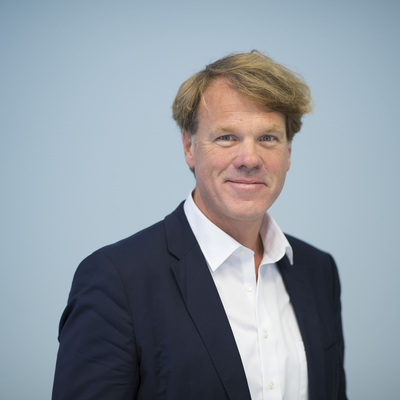
Prof. Dr. Ulf-Daniel Ehlers
Guest Professor of Educational Management and Lifelong Learning
Ulf spends his time on a question universities find uncomfortable: whether what they teach is what graduates will actually need. His work on Future Skills argues that the answer is often no — that the shift from knowledge transfer to capability development is not a matter of updating a module list but of changing how institutions are run. He has helped build one university from the ground up, advised more than thirty others across five continents, and been at the centre of European debates on quality in higher education for two decades.
Future Skills, and what they demand of institutions
Ulf’s book Future Skills has shaped how European higher education talks about capability-oriented education — the argument that graduates need the capacity to act competently in situations nobody has prepared them for, and that curricula built for knowledge delivery cannot produce it. What makes his version of the argument credible is that he follows it through to the institutional consequences: assessment, governance, programme design, staff development. It is easy to endorse Future Skills in a mission statement. He works on what has to change afterwards.
Quality as something learners experience
Long before this, Ulf’s doctoral and postdoctoral research developed a learner-centred theory of quality in e-learning — his Learners’ Quality Model — which reframed quality away from institutional compliance and toward what learners actually experience. He went on to found and lead the European Foundation for Quality in E-Learning and served as Vice-President of EURASHE and as a director of the European Distance and E-Learning Network. The thread has held for twenty years: quality is not a checklist an institution passes, but something that happens or fails to happen in a learner’s encounter with a programme.
He has built the thing, not only studied it
From 2011 to 2017 Ulf was Founding Vice-President for Quality and Teaching at Baden-Württemberg Cooperative State University, responsible for building Germany’s first cooperative university — its quality system, its systems accreditation, its learning innovation. He founded the NextEducation research group in 2017, directed the Future Learning Laboratory at KIT, and has founded five social businesses in education innovation. He has secured over €20 million in research funding and led more than fifty European and national R&D projects. Few people writing about educational transformation have had to implement it at that scale.
Assessment in the age of AI
His current teaching interests include one of the sharpest live problems in higher education: what examination and assessment mean now that generative AI can produce the standard essay. He also works on microcredentials and flexible learning pathways, on digital transformation and quality cultures, and on governance and change management. Alongside this he is a certified systemic coach and a trainer in mindful and non-violent communication — which shapes his teaching on leadership as much as any of the research does.
At Karls since 2025
Ulf joined Karlshochschule as a Guest Professor in September 2025. He teaches educational management and leadership, lifelong learning, digital transformation, quality management and curriculum design, and supervises BA, MA and PhD theses across these areas. He has advised the World Bank, the OECD, UNESCO, the European Commission and national education ministries, and co-chaired the interministerial advisory group on teaching and learning for the Bologna Ministers Conference.
Quality is not something an institution certifies. It is something a learner experiences.
Facts, figures and the full CV
Role
- Guest Professor
- At the university since September 2025
Focus on teaching
- Educational management and leadership in higher education
- Lifelong learning and professional development
- Future Skills and capability-oriented education
- Digital transformation in teaching and learning
- Quality management, assessment and innovative examination formats
- Learning design and educational innovation
- Cooperative higher education and dual study programmes
- Mindful leadership, systemic coaching and non-violent communication
Modules
- Educational Management & Leadership
- Lifelong Learning & Professional Development
- Digital Transformation in Higher Education
- Quality Management and Innovation in Learning
- Future Skills & Capability-Oriented Curriculum Design
- Research Methods in Higher and Continuing Education
Research interests and fields
-
Prof. Ehlers is happy to supervise BA, MA and PhD theses in:
- Future Skills, capability-oriented education and competence development
- Digital transformation of higher education institutions and study programmes
- Quality development and quality cultures in (digital) learning
- Lifelong learning, continuing education and professional development
- Cooperative education, dual study programmes and work-based learning
- Microcredentials, new formats of recognition and flexible learning pathways
- Governance, leadership and change management in higher education
- Innovative assessment and examination cultures in the age of AI
Academic training and further education
- Habilitation (Dr. phil. habil.) in Educational Sciences (Adult and Continuing Education), University of Duisburg-Essen (2008), on developing a quality theory for education
- PhD in Education (Dr. phil.), University of Bielefeld (2004), on learner-centred and pedagogical quality research perspectives in e-learning (summa cum laude)
- Degree in Social and Political Sciences, English Literature and Pedagogy; First State Examination for Secondary School Teaching, University of Bielefeld (1999)
- Postgraduate training in research methods and research management
- Certified systemic coach and facilitator; trainer in mindful and non-violent communication
Practical experience
- Professor of Educational Management and Lifelong Learning
- Senior Advisor for Digital Transformation in Teaching and Learning, Baden-Württemberg Cooperative State University (DHBW), since 2017
- Founding Vice-President for Quality and Teaching, DHBW (2011–2017) — responsible for developing Germany’s first cooperative university, quality management, systems accreditation and learning innovation
- Founder and Head, NextEducation Research Group, since 2017
- Scientific Director, Future Learning Laboratory / House of Competence, Karlsruhe Institute of Technology (2020–2023)
- Serial social entrepreneur, founder of five social businesses in education innovation and technology
- Professor of Media Didactics (interim), University of Augsburg (2010)
- Associate Professor, University of Duisburg-Essen (2008–2011)
- Associate Professor, University of Maryland University College, USA (2007–2009), Graduate School of Management & Technology
- Founder and President, European Foundation for Quality in E-Learning (EFQUEL), Belgium (2011–2014)
- Founder and executive board member, Future Skills Alliance g.e.V.
- Work with more than 30 universities across five continents; advisory work for ministries, international organisations and higher education institutions
Leadership roles, boards and professional service
- Vice-President, European Association of Institutions in Higher Education (EURASHE)
- Director and Executive Committee member, European Distance and E-Learning Network (EDEN); EDEN Fellow and Senior Fellow
- Founding President and former Vice-President, EFQUEL
- President, Society for Media in Science (GMW e.V.), Germany (2008–2011)
- Advisory board member, U-Multirank European ranking initiative (European Commission)
- Co-Chair, interministerial Advisory Group for Teaching and Learning, Bologna Ministers Conference (2018–2021)
- Member of several national and international advisory boards on higher education, quality and digital learning
Awards
- Multiple Comenius Awards and Medals for innovative digital learning and assessment solutions
- Emerald International Excellence Award, Outstanding Paper (2010)
- EDEN Best Paper Award (2004), with several further finalist nominations
- Senior Fellow, European Distance and E-Learning Network (EDEN)
Fellowships and grants
- Principal investigator and coordinator of more than 50 European and national R&D projects on innovation in learning, quality in e-learning, Future Skills and digital transformation
- More than €20 million in research funding from EU programmes and German national funding bodies since 2000
- International advisory and expert roles for the World Bank, OECD, UNESCO, the European Union and national education ministries
Publications
-
More than 17 authored or edited books, over 300 scholarly articles, book chapters and reports, and more than 7,500 academic citations. His book Future Skills and his Learners’ Quality Model for e-learning have shaped international discourse on learner-centred quality and capability-oriented education.
A regularly updated publication list is available at next-education.org
Want to study with Ulf?
He teaches educational management and leadership, lifelong learning, digital transformation and curriculum design, and supervises theses across higher education research. Come to an info day, sit in on a session, or write to him directly.